Taro Sago Coconut Dessert
Recipe research evaluation
Description
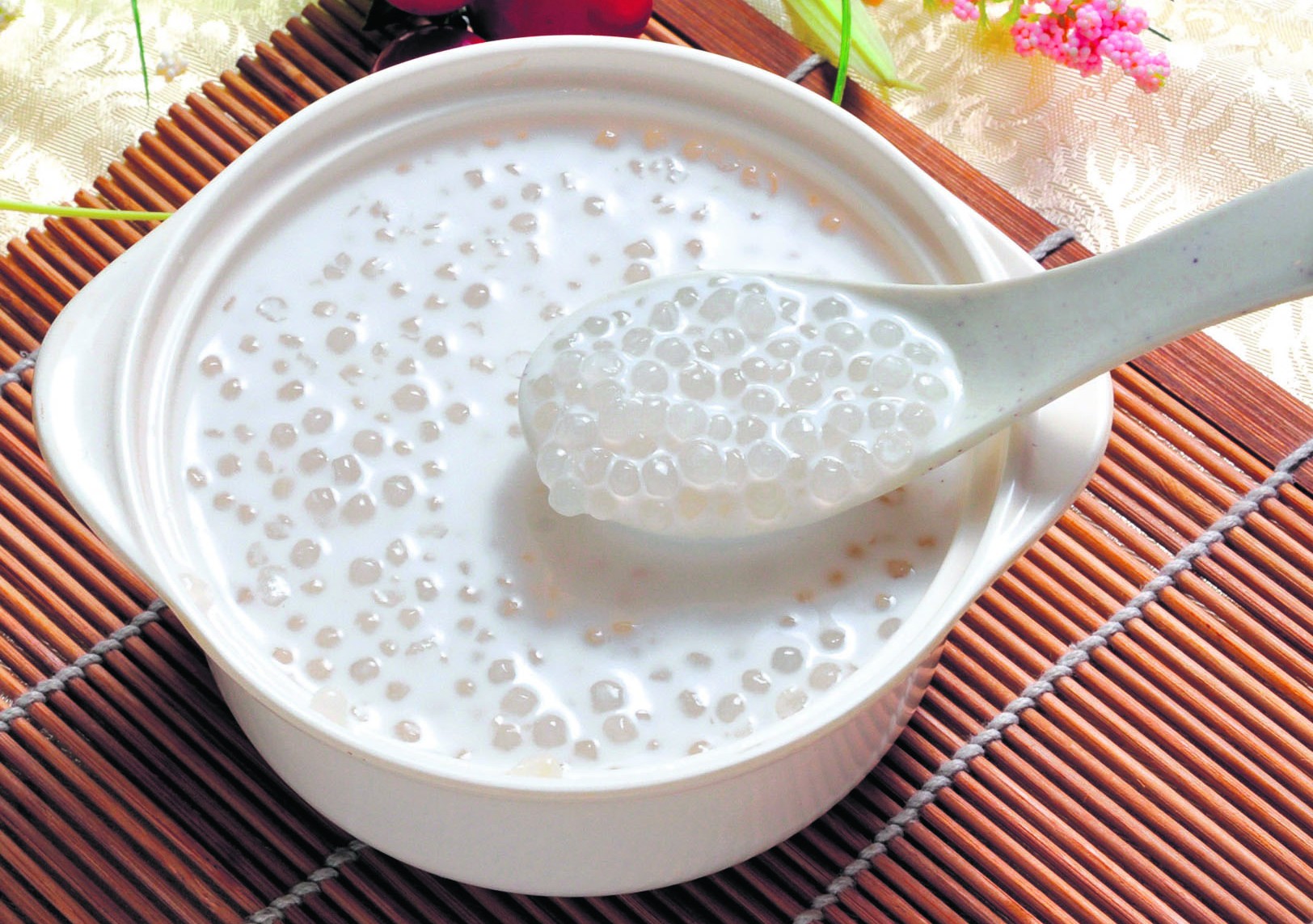
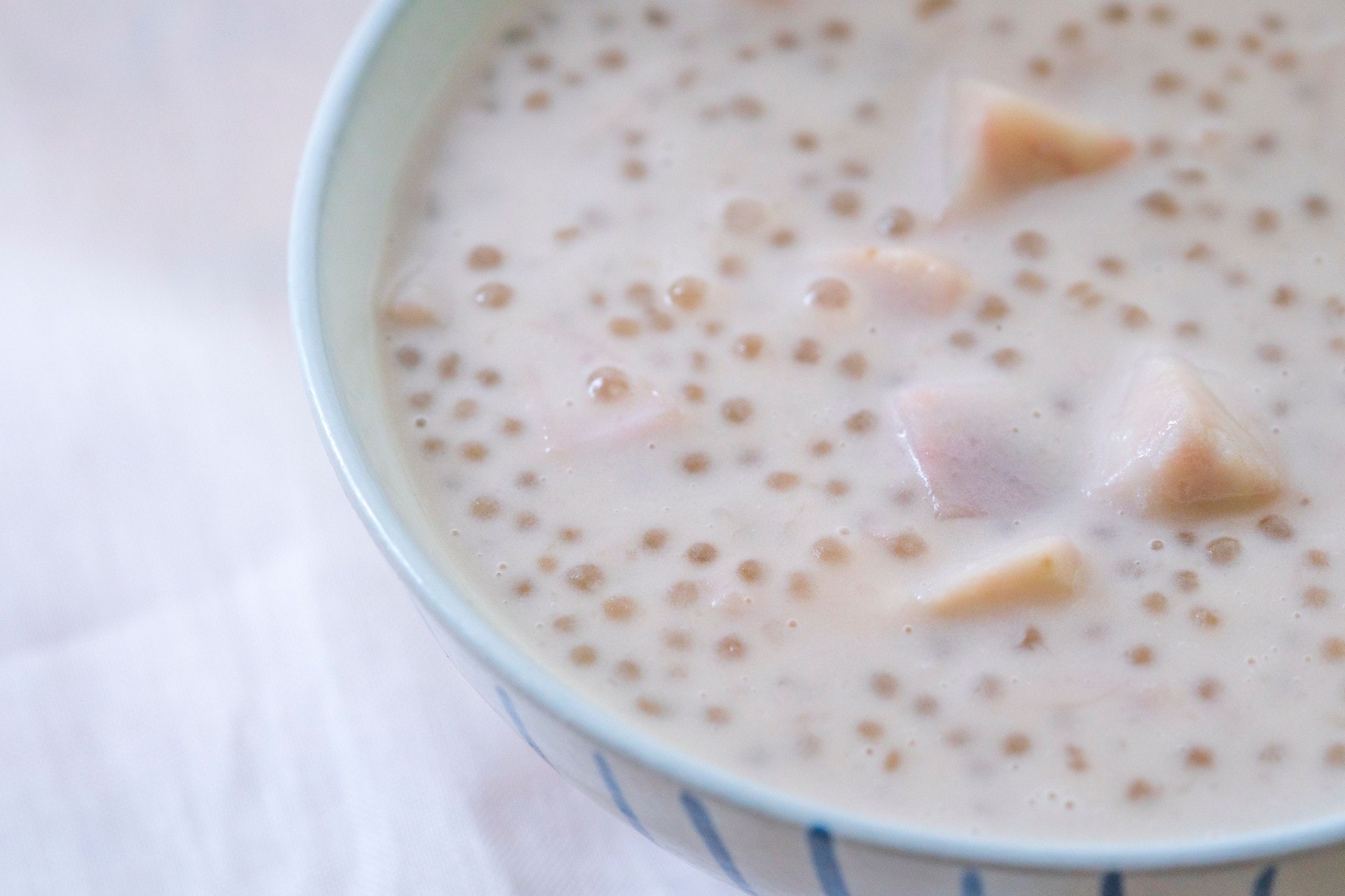
Taro sago coconut dessert or Sai mai lo (西米露) is a classic Cantonese dessert. It's often served in Chinese restaurants after a banquet or dinner, but it's a common dessert that anyone can make.
Details
Prep Time: 15 minutes
Cook time: 35 minutes
Total Time: 50 minnutes
Servings: 8
Calories: 564 kcal
Free of gluten and top 8 allergens.
Equipment
Sieve
Food processoor
Ingredients
- 1 kg/2.2 lbl taro
- 1/2 US cup sago
- 150 g / 0.33 lb sugar
- 1/2 tsp salt
- 2 cups coconut milk
- 6 cups water (for boiling sago)
- 1/2 tsp salt
- 12 cups water (for ice bath)
- ice
Instructions
- Bring 1 1/2 L (6 US cups) water to boil in a pot and pour the tapioca pearls in. Stir continuously for 10 minutes to avoid clumping and sticking to the pot’s base.
-
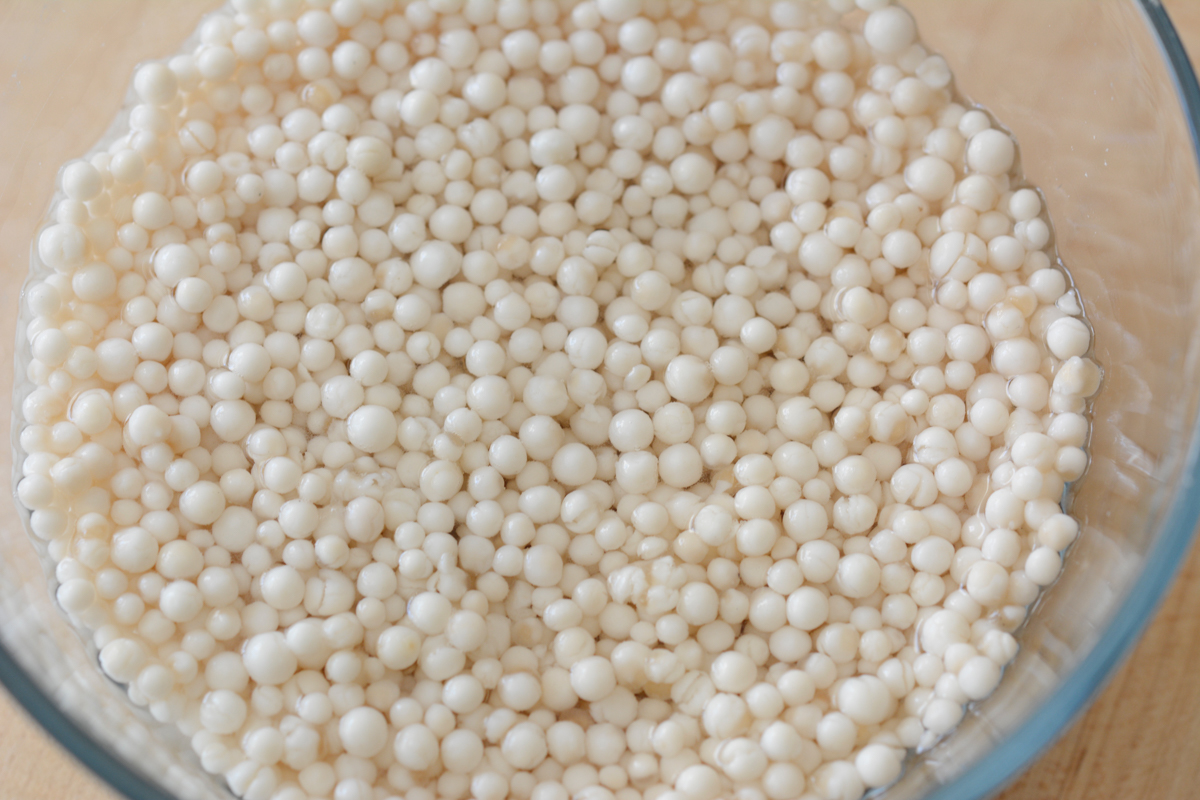
Turn off the heat and put the lid of the pot on, then let it cook in the residual heat for 20 minutes. (Note: By the end of this stage, the pearls will become completely transparent and sink to the bottom. If they are still white on the inside, let it sit in the pot for longer.)
-
Pour the pearls out through a sieve while running under cold water to loosen them. (Note: This step will keep the sago tight and springy as it stops the cooking process.)
-
Prepare an ice bath with enough water to completely submerge the pearls. Pour the sago into the ice bath.
-
Peel and cut the taro into small chunks, roughly 1 cm (0.4″) thick.
-
Steam the root vegetable for 15 minutes or until firm and slightly undercooked.
-
Use a blender to blitz the steamed pieces with coconut cream until it forms a smooth paste. For every 1/2 US cup, blitz it with 1/2 tbsp coconut cream and 3 tbsp water. Leave half of the pieces unblended to enjoy as chunks.
-
Bring 1L water to a boil and melt the rock sugar until completely dissolved, then pour the liquid into a bowl.
-
In the same pot, bring the coconut cream to a simmer.
-
Add the paste in and stir until combined.
-
Pour in the taro chunks, sugar water and salt, stirring to combine all the ingredients.
-
When mixed, drain the tapioca pearls and add them into the dessert pot.
-
Stir until well combined and serve immediately as is or refrigerate to enjoy cold! Put any leftovers in the fridge!
Sources
Images




Visual Research
Recipe websites
-
foodnetwork.com
The website's information is very clear, and I think it's interesting how the ingredients and the directions are laid out side by side. I do wonder how well that would work/look when the instructions are much longer than the ingredients list. There is an option to select/deselect ingredients. While I question the usefulness of this function, I want to look into it and maybe incorporate it into my page.
-
allrecipes.com
I like the photo gallery at the top and the border around the recipe details. It also includes nutrition info which is something I will consider. It also has a wide margin and I like how it contains the information neatly.
-
epicurious.com
At the top of each recipe page is a large hero image with the title, a star rating, and option to save the recipe. It's a visually compelling way to introduce the food. Overall, the design of the page is clear and pleasant to look at.
Non-recipe websites
-
fallengrape.com
I like the colors and how the visual language matches with the natural branding. The "buy" section's buttons and style are things that I want to incorporate within my page design.
-
https://ru-ru-ru.com/
There are a few simple main colors and what makes this website stand out to me is the illustration that is repeated throughout the site. I was thinking that I could put a character in my site that "guides" the user through the recipe.
-
https://eatdoughy.com/
The "Double Chocolate Cookie Dough" section shows ingredients in a simplistic yet visually appealing way and I want to show my ingredients like that as well. The color palette in this website inspires me to use soft colors in my project.